

Purple perennials offer striking visual impact in British gardens, providing depth and contrast across multiple seasons. Adapted to the UK’s climate zones and growing conditions, these reliable plants return year after year with minimal fuss. In this guide, you’ll discover the benefits of purple flowering plants, how to select varieties suited to your garden conditions, essential care advice, and ten outstanding purple perennial recommendations that thrive throughout Britain.
Purple perennials UK gardeners favour add sophisticated drama and rich contrast to outdoor spaces. In colour theory, violet and lavender tones create depth, making borders appear fuller while simultaneously calming and balancing brighter hues like yellows and oranges. These captivating shades convey a sense of luxury and tranquility, transforming ordinary garden beds into visual masterpieces.
Famous British displays, like those at RHS Wisley, demonstrate how these royal-hued beauties can serve as statement plants or act as transitional colours that bridge different sections of a garden design. Their versatility allows them to complement virtually any garden style, from cottage gardens to contemporary minimalist spaces.
When incorporated thoughtfully, purple flowering perennials create visual intrigue through contrast. Pairing them with lime-green foliage plants creates dynamic tension, while combining with silver-leaved companions produces elegant sophistication. They work equally well alongside complementary yellows for maximum impact or with analogous blues for serene harmony.

Many UK gardeners don’t realize that purple flowers possess a secret superpower: they’re particularly attractive to beneficial insects. Bees and butterflies are naturally drawn to violet wavelengths, making purple perennials excellent choices for wildlife-friendly gardens. Incorporating these plants supports local biodiversity while ensuring your flowers receive optimal pollination, producing healthier plants and more abundant blooms.
With thoughtful selection, violet-hued perennial plants can provide visual interest from early spring through late autumn. Early bloomers like sweet violets emerge when little else flowers, while late-season performers such as Japanese anemones and Russian sage extend the show well into September and beyond. By layering early, mid-season and late-flowering varieties, your garden maintains purple accents throughout the growing calendar.
Choosing successful purple perennials UK gardeners can rely upon requires consideration of several factors including hardiness, soil conditions, available sunlight, and maintenance requirements. The wide variety of violet-toned plants means there’s something suitable for virtually every British garden situation, from exposed coastal sites to sheltered urban spaces.
Before purchasing, check plant labels for hardiness ratings appropriate to your region or consult the excellent RHS Plant Finder tool to ensure selections will thrive in your specific location. Local garden centres can provide valuable advice on regional variations that might affect performance.
The Royal Horticultural Society hardiness scale runs from H1 (tender, requiring minimum 15°C) through H7 (very hardy, surviving below -20°C). For reliable performance throughout Britain, select perennial purple plants rated H5 (hardy to -15°C) or above. Northern and exposed gardens particularly benefit from choosing H6-H7 rated varieties that withstand harsh winter conditions without special protection.
Soil composition significantly impacts perennial success. While many purple-flowering varieties prefer neutral to slightly alkaline conditions, some, like heathers, demand acidic soil. Testing your garden soil provides valuable information before planting. Heavy clay benefits from organic matter incorporation to improve drainage, while sandy soils may need enrichment to retain sufficient moisture and nutrients.

Sun-loving purple perennials like lavender and Russian sage require six or more hours of direct sunlight daily to produce abundant flowers and maintain compact growth. Shade-tolerant purple perennials including sweet violets and certain geranium varieties thrive in dappled light beneath trees or in north-facing positions. Matching plant requirements to your garden’s light conditions ensures optimal performance and longevity.
When establishing new perennials, prepare planting holes twice the width of the rootball and incorporate well-rotted organic matter. Place plants at the same soil level as they were in their containers and water thoroughly after planting. Applying a 5cm layer of bark mulch or garden compost helps retain moisture, suppress weeds, and gradually improves soil structure.
Most shade-tolerant purple perennials benefit from an annual feed with balanced fertiliser in spring, while sun-loving varieties often prefer leaner conditions. Deadheading spent blooms extends flowering periods for many varieties, and dividing crowded clumps every 3-4 years rejuvenates plants while providing free additions to your garden.
The following selections represent outstanding purple perennials that perform reliably across British growing conditions. Each has been chosen based on excellent cold hardiness (H5 or above), value to wildlife, extended seasonal interest, and reasonable maintenance requirements. These purple flowering perennials deliver maximum impact with minimum fuss.
Sweet violets offer delicate charm and intoxicating fragrance from February through April when little else blooms in UK gardens. These diminutive purple perennials form low-growing mats of heart-shaped leaves that provide excellent ground cover beneath deciduous shrubs or along woodland pathways. Their scented flowers, varying from deep violet to lilac, appear in abundance and make delightful additions to posies or crystallised decorations for springtime desserts.
While their spreading habit makes them valuable for covering bare soil, sweet violets can become invasive in ideal conditions. Control their spread by planting within contained areas or removing unwanted runners. In return for minimal attention, these purple flowering perennials reliably return each year, gradually forming substantial colonies that suppress weeds while delighting the senses with their nostalgic perfume.

No list of purple perennials UK gardens treasure would be complete without English lavender. This Mediterranean native has adapted perfectly to British conditions, particularly in well-drained soil. The aromatic silver-grey foliage provides year-round structure, while the violet flower spikes emerge in June and July, transforming gardens with their distinctive colour and heavenly scent.
Lavender serves as a magnet for bees and butterflies, making it a cornerstone plant for pollinator-friendly gardens. For best results, prune immediately after flowering, cutting back to just above the woody base but never into old wood. This maintenance encourages bushiness and prevents the leggy, open growth that diminishes both appearance and hardiness. In exposed locations, shelter from harsh winter winds extends plant longevity considerably.
Among the most versatile purple perennials for UK gardens, woodland sage produces spectacular spikes of deep violet flowers beginning in May and continuing through July. Compact varieties like ‘Caradonna’ and ‘East Friesland’ form neat mounds suitable for both borders and containers, while taller types provide spectacular vertical accents that wave gently in summer breezes.
Beloved by bees and butterflies, these pollinator-friendly perennials bring garden borders alive with beneficial insect activity. For continuous blooming throughout summer, cut back flower stems immediately after the first flush fades. This prompt deadheading stimulates a second and sometimes third flowering period, extending the display into September. Drought-tolerant once established, salvias require minimal watering even during dry spells, making them practical choices for busy gardeners.

Among the most reliable purple flowering perennials for British gardens, Phlox paniculata ‘Purple Flame’ produces intensely coloured blooms with a delightful fragrance that perfumes the air on summer evenings. Growing to approximately 80cm tall, this statuesque beauty creates a magnificent display from July through August, with abundant flower heads attracting a wealth of butterflies.
Extremely winter-hardy (surviving temperatures below -20°C), perennial phlox performs superbly even in northern counties and exposed positions. For optimal health, provide ample spacing between plants to promote air circulation, reducing the risk of powdery mildew. Taller specimens benefit from discreet staking in windy locations. After flowering, cut back stems to near ground level to maintain neat appearance and encourage vigorous growth the following season.
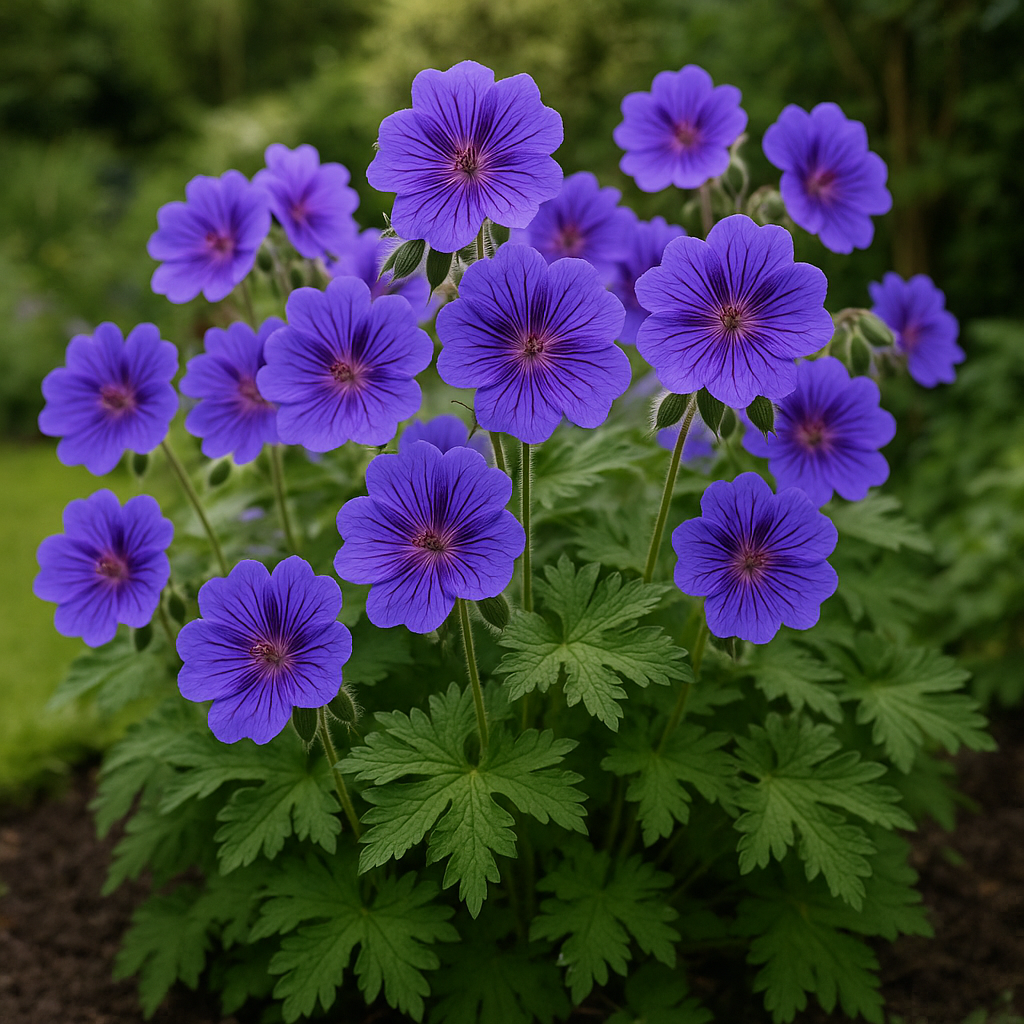
This adaptable purple perennial forms generous mounds of deeply-cut foliage topped with abundant saucer-shaped blooms in rich violet-blue with distinctive darker veining. Reaching approximately 60cm in height and spread, Geranium × magnificum makes an excellent mid-border plant or underplanting for deciduous shrubs and roses, where it suppresses weeds while contributing months of colour.
Self-seeding gently in favourable conditions, purple cranesbill gradually forms natural drifts that require minimal intervention. The foliage takes on attractive reddish tints in autumn before dying back for winter. Highly tolerant of different soil types and light levels, this shade-tolerant purple perennial thrives in positions many other plants find challenging, including dry shade beneath established trees, making it invaluable for problem garden areas.
Adding architectural intrigue to spring borders, Aquilegia ‘Purple Barlow’ boasts fully double, pompom-like blooms in deep aubergine purple. These sophisticated flowers appear on graceful stems rising to 75cm above attractive, fern-like foliage from May into July. The unusual flower form brings textural contrast to planting schemes while maintaining the classic woodland charm characteristic of columbines.
Self-seeding freely if flowers are left to mature, these purple perennials gradually establish charming colonies throughout the garden. Their deer-resistant nature makes them particularly valuable in rural settings where wildlife pressure challenges many ornamentals. While flower colours in seedlings may vary from the parent plant, this natural diversity creates captivating, meadow-like effects in informal garden settings. Cut spent flower stems promptly to keep plants looking tidy and encourage longer blooming.
Creating a diaphanous purple haze from July through October, Russian sage combines silver-grey foliage with countless tiny lavender-blue flowers on upright, branching stems. Reaching approximately 1.2m in height, this architectural perennial brings ethereal beauty to sunny borders, gravel gardens and Mediterranean-inspired planting schemes throughout Britain.
Thriving in poor, well-drained conditions, these sun-loving purple perennials require minimal watering once established, making them excellent choices for drought-prone gardens and water-conscious gardeners. For best results, cut stems back hard to 15cm in early spring rather than autumn, as the woody framework provides winter interest and protects the crown from excessive moisture. Companion planting with golden rudbeckias or fiery red crocosmias creates stunning late-season colour contrasts that extend the garden’s peak performance into autumn.

Compact and floriferous, Veronica ‘Royal Candles’ produces abundant spikes of intense violet-blue flowers from June onwards. Growing to just 45cm tall, this purple perennial UK gardeners increasingly favour creates vibrant vertical accents in the front of borders or in container displays, where its neat, upright habit requires no staking even in exposed positions.
The dense flower spikes attract numerous pollinating insects, particularly bees and hoverflies, making speedwell an excellent addition to wildlife-friendly planting schemes. For extended flowering, promptly remove spent spikes, which encourages additional bloom cycles well into September. The evergreen foliage maintains year-round presence, providing winter structure when many perennials disappear. Cut fresh flowers make excellent additions to summer bouquets, lasting up to a week in water while maintaining their rich colouration.
Elegant Japanese anemones bring sophisticated beauty to borders when many other perennials fade. ‘September Charm’ produces abundant silvery-pink flowers with deeper rosy-purple reverse colouration on tall, wiry stems reaching 1m in height. The delicate, semi-double blooms dance above attractive lobed foliage from August through October, bridging the seasonal transition with grace and poise.
These pollinator-friendly perennials thrive in humus-rich, moisture-retentive soil where they gradually form substantial clumps. In particularly windy locations, provide discrete support for flowering stems to prevent them toppling. While slow to establish initially, Japanese anemones eventually spread via underground runners, creating magnificent drifts in woodland edges, partially shaded borders and north-facing garden aspects where many sun-loving perennials struggle.

When garden space is limited, vertical solutions become invaluable. Clematis ‘Etoile Violette’ offers spectacular climbing potential with its vigorous growth habit and profusion of deep purple, velvety blooms appearing from June through September. Reaching 3-4m in height, this versatile purple perennial transforms walls, fences, obelisks and mature shrubs with cascades of intense violet flowers.
Unlike large-flowered clematis varieties, this viticella type requires minimal maintenance—simply cut all stems back to approximately 30cm above ground level in late winter. Plant with roots in shade and stems in sun for optimal performance, positioning stones or shallow-rooted companions over the root zone to keep it cool. Group 3 pruning (hard annual cutback) encourages strong regrowth and prevents the tangled, woody base that can develop with neglected specimens. Small garden owners particularly appreciate this plant’s ability to occupy minimal ground space while delivering maximum visual impact.
Incorporating purple perennials into UK gardens creates visually striking displays with remarkable seasonal longevity and minimal maintenance requirements. From the earliest sweet violets of late winter through to the autumn splendour of Japanese anemones, violet-hued plants offer reliable performance in Britain’s varied growing conditions while supporting essential pollinator populations.
Experiment with combinations of different purple flowering perennials to create cohesive colour themes or dramatic contrasts. Try planting drifts of single varieties for impactful simplicity or develop complex mixed borders where purple acts as a sophisticated linking element between more boisterous colours. Consider how light affects perception—morning and evening sun intensifies violet tones, while midday brightness can fade delicate lavenders to silvery blues.
For personalised recommendations suited to your specific garden conditions, consult the comprehensive RHS Plant Finder tool or visit specialist nurseries where knowledgeable staff can guide your selections. Share your purple perennial successes on gardening social media groups to inspire fellow enthusiasts and discover regional varieties that perform exceptionally well in your local microclimate.
Phlox paniculata (hardiness H7) and Geranium × magnificum (H7) tolerate the coldest UK zones, thriving even in exposed sites.
Perovskia atriplicifolia, Salvia nemorosa and Anemone × hybrida ‘September Charm’ offer up to three months of colour, from midsummer into autumn.
Yes—Viola odorata and Geranium × magnificum perform well in part to deep shade, while Japanese Anemone and Aquilegia also tolerate dappled light.
Deadhead spent flowers, prune back in early summer for a second flush, and apply a balanced feed monthly during the growing season.
Absolutely—purple blooms are highly attractive to bees, butterflies and hoverflies; species like lavender, salvia and Russian sage excel at supporting pollinators.