

Purple perennials are truly a must-have for UK borders, offering a regal colour that adds sophistication and depth to any garden design. Their rich hues range from soft lavenders to deep violets, creating striking visual interest while perfectly complementing other planting schemes. These reliable bloomers return faithfully year after year, standing up admirably to British climate conditions while providing essential support for our precious pollinators. Whether you’re looking to create dramatic height at the back of a border or seeking ground-hugging varieties for the front edges, these ten exceptional purple perennial flowers will bring enduring beauty to every corner of your garden.
Tall perennials draw the eye skyward, framing borders and creating architectural interest. Here are three purple-flowered perennials that reach 1.2 m (4 ft) or taller, all hardy in UK zones 6–8.
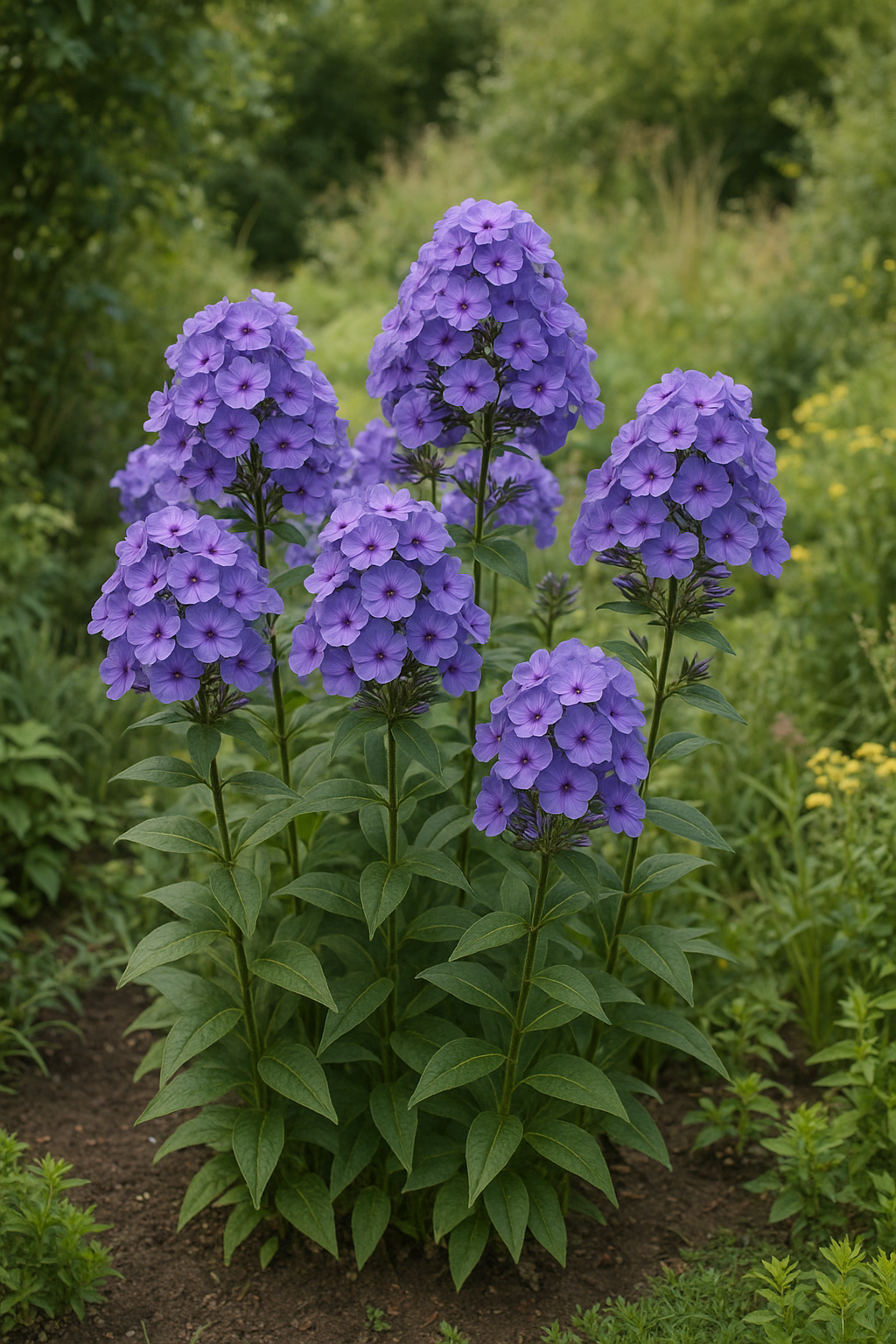
This stunning hardy perennial reaches impressive heights of 1.2–1.5 m with a spread of about 60 cm. ‘Blue Paradise’ produces large heads of fragrant, deep violet-blue flowers that appear to change colour throughout the day, sometimes showing more purple hues in the morning and evening light.
For best results, plant in full sun in moisture-retentive but well-drained soil. Regular deadheading will encourage additional blooms, while dividing clumps every 3-4 years keeps plants vigorous. These magnificent flowers act as irresistible pollinator magnets, bringing beneficial insects to your UK garden, and thankfully, deer tend to leave them alone.
This architectural beauty forms a clumping habit reaching up to 1.3 m in height, topped with clusters of tiny, vibrant purple flowers carried on slender, wiry stems. The airy umbels of violet-purple flowers create a floating effect above surrounding plants, adding movement and grace to borders.
One of the most economical ways to acquire these plants is to sow from seed in spring. Once established, Verbena bonariensis is remarkably drought-tolerant and continues providing visual interest well into autumn when many other perennials have finished flowering. Their see-through quality makes them perfect for planting throughout the border without blocking views of plants behind them, creating depth and intrigue in UK gardens.

This impressive late-season bloomer reaches heights of 1.4 m, producing elegant hooded flowers in a striking combination of purple and white. Perfectly suited to the back of borders in UK gardens, this hardy perennial adds valuable vertical interest when many other plants have finished flowering.
Unlike many tall purple perennials, Aconitum tolerates partial shade, making it ideal for those trickier north-facing spots. However, an important safety note: all parts of this plant are poisonous if ingested, so wear gloves when handling and keep away from children and pets. Despite this caution, its architectural presence and unusual bicolored blooms make it a valuable addition to the UK garden palette.

At 0.6–1 m tall, these perennials suit the middle of a mixed border or can stand alone in a purple-themed planting. They rebloom, attract bees and butterflies, and fill midsummer gaps.
This stellar medium-height purple perennial reaches approximately 0.6 m, producing striking deep purple-blue flower spikes from June through September. The nearly black stems provide additional visual interest, creating a sophisticated architectural presence in garden borders.
One of the most virtuous qualities of ‘Caradonna’ is its cut-and-come-again nature—promptly removing spent flowers encourages fresh blooms to appear. Deer tend to avoid this aromatic beauty, and it pairs spectacularly with companions featuring yellow flowers or silver foliage for maximum impact. In UK gardens, this drought-tolerant perennial thrives in sunny positions and well-drained soil.

This RHS Award of Garden Merit winner forms a spreading mound about 0.4 m in height with a considerably wider spread, making it excellent value in garden borders. The large, cup-shaped lavender-purple flowers with white centers bloom prolifically from early summer through autumn—an exceptionally long flowering period for a hardy geranium.
One of ‘Rozanne’s’ greatest virtues is its self-cleaning habit; spent blooms disappear naturally without requiring deadheading. This medium-height purple perennial tolerates light shade while still flowering abundantly, making it versatile for various positions in UK gardens. The attractive, deeply divided foliage provides additional interest and often develops attractive autumn coloration before dying back for winter.

This outstanding catmint forms a neat clump approximately 0.5 m tall, featuring aromatic silver-green foliage crowned with eye-catching electric violet flower spikes. The contrast between the cool-toned leaves and vibrant blossoms creates a captivating visual effect in garden borders.
Exceptionally drought tolerant once established, ‘Heartbreaker’ performs brilliantly in gravel gardens or low-maintenance planting schemes throughout the UK. Cutting back after the first flush of flowers often stimulates a second display later in the season. As a bonus, the aromatic foliage typically repels rabbits and deer while simultaneously attracting beneficial pollinators to your garden.

This statuesque perennial reaches about 0.9 m in height, offering gorgeous spikes of pink-lavender, pea-like flowers in late spring to early summer. The blooms give way to interesting architectural seed pods that provide textural interest well into autumn, while the blue-green foliage remains attractive throughout the growing season.
A member of the legume family, Baptisia features nitrogen-fixing roots that actually improve soil fertility over time. Medium-height purple perennials like ‘Pink Truffles’ establish deep root systems, making them remarkably drought-resistant once settled in. Though slow to establish, these long-lived perennials ultimately require minimal care, offering decades of beauty in UK garden borders with adequate drainage.

Shorter than 0.5 m, these perennials are perfect at the front of a border, tumbling over walls or brightening containers. Three outstanding purple varieties that thrive in UK conditions:
This compact purple perennial reaches approximately 0.4 m in height, producing intense purple spikes that create vibrant vertical accents at the front of borders. The long blooming period from June through September ensures sustained interest throughout the main gardening season.
The ‘Royal Candles’ cultivar offers excellent mildew resistance, a significant improvement over older varieties. Its sturdy stems typically stand upright without staking, maintaining a neat appearance with minimal maintenance. These diminutive beauties work brilliantly in small gardens where every plant must earn its keep, attracting numerous pollinators while requiring little attention beyond occasional deadheading to promote continued flowering.

This delightful purple perennial groundcover forms a low-growing carpet reaching just 0.2 m in height but spreading considerably wider. In early spring, the evergreen foliage disappears beneath a stunning lavender-purple mat of small, cross-shaped flowers that create spectacular cascades of colour.
Perfect for rock gardens, wall crevices, or border edging, ‘Purple Cascade’ thrives in poor to moderately fertile soil as long as drainage is excellent. Once flowering concludes, a light trim helps maintain a neat habit and may encourage a small second flush. Exceptionally hardy and drought-tolerant once established, these compact purple perennials provide reliable ground coverage in challenging positions throughout UK gardens.

This striking foliage plant reaches approximately 0.3 m in height, offering deep purple, almost metallic leaves that retain their colour throughout the growing season. In summer, small airy cream flowers appear on slender stems, adding delicate vertical interest to this primarily foliage-focused perennial.
‘Plum Pudding’ makes an excellent container plant, its rich purple leaves providing sophisticated colour even when not in bloom. Unlike many purple-flowered perennials, Heuchera thrives in shade conditions, making it invaluable for those darker corners of UK gardens. The evergreen or semi-evergreen foliage (depending on winter severity) ensures year-round structure and interest, particularly effective when paired with lime-green or silver companions.

By incorporating these stunning purple perennials at various heights, you can create a garden with exceptional visual impact and year-round interest. Use tall varieties like Phlox paniculata and Verbena bonariensis as impressive focal points at the back of borders. Position mid-height selections such as Salvia ‘Caradonna’ and Geranium ‘Rozanne’ throughout the middle sections to provide substance and continuous colour. Finally, edge your borders with compact varieties like Veronica and Aubrieta to create a seamless transition to pathways.
For maximum effect, consider mixing both purple foliage and flowers, creating layers of this regal shade throughout your planting scheme. Pay careful attention to your site conditions—while many purple perennials prefer sun, options like Heuchera and Aconitum perform admirably in partial shade. Creating extended seasonal interest is simply a matter of combining early bloomers (Aubrieta), midsummer stars (Salvias and Phlox), and late-season performers (Aconitum and Verbena) for a continuously evolving display.
The purple palette offers extraordinary versatility, complementing virtually every other garden colour from whites and silvers to yellows and oranges. By selecting from these ten outstanding varieties, you’ll create a purple perennial collection that returns reliably year after year, building in beauty while supporting essential pollinators throughout your garden.
Plants hardy to zones 5–7, such as Phlox paniculata, Salvia nemorosa, Baptisia australis, and Heuchera cultivars offer exceptional reliability in UK gardens. These varieties have proven their resilience through typical British winters and continue to thrive year after year with minimal protection.
For success with purple perennials in poorly drained conditions, consider creating raised beds or adding ample grit or compost to improve drainage. Alternatively, choose moisture-tolerant purple varieties like Rodgersia, Lysimachia, and Aconitum which naturally adapt to heavier, damper soils.
Yes—many purple perennials like Verbena bonariensis, Salvia, and buddleias are magnets for bees, butterflies and hoverflies. The purple colour spectrum is particularly visible to bees, and many purple flowers offer abundant nectar and pollen resources that support diverse pollinator populations.
Yes—medium-height varieties like Heuchera, Geranium ‘Rozanne’, and Pulmonaria ‘Pretty in Pink’ thrive in dappled shade. These adaptable perennials produce reliable purple blooms or foliage even with reduced sunlight, making them perfect for woodland edges or north-facing borders.
Ensure good air circulation by providing adequate spacing between plants, avoid overhead watering which keeps foliage damp, and choose mildew-resistant cultivars like ‘Glamour Girl’ phlox and ‘May Night’ salvia. Regular division of older clumps also helps maintain plant vigor and disease resistance.